Imperial
Imperial College London (ICL) is a globally recognised institution for its excellence in medical education and research. Imperial currently ranks 2nd in the UK for medicine by The Guardian 2026, and 3rd in the UK by the Complete University Guide 2026.
About The Course
Imperial College London Medical School (ICLMS) runs a comprehensive six-year integrated programme within one of Europe’s largest and most esteemed medical departments.
The course is delivered through a mix of traditional and innovative teaching methods which involves workshops, problem-based learning and lectures.
ICLMS extends its reach and impact through close collaboration with a wide range of major NHS trusts, hospitals and clinics, including Charing Cross Hospital and St Mary’s Hospital. Additionally, with campuses across north and west London, ICLMS is home to a dynamic and expansive environment for medical education and research.
From the onset of their studies, students will be exposed to clinical skills training and patient-facing clinical care through hospital, GP and community placements. Imperial offers a case-based learning approach, allowing students to integrate lecture and lab-based learning into clinical practice. The continuity of modules across years fosters a continuous and dynamic expansion of knowledge, each year adding more depth and complexity onto previous learning.
Additionally, Imperial offers a wide range of BSc programmes for students to choose from in year 4, ranging from Management to Endocrinology and Cancer Frontiers. This unique opportunity allows students to develop their academic research skills in preparation for further research opportunities that may present themselves.
Imperial’s spiral curriculum is split into three phases. The first phase covers Years 1-3, the second phase covers Year 4 and the third phase covers Years 5-6.
Upon graduation, students will be awarded a dual award degree with a specialist BSc of their choosing. All students will graduate with both an MBBS and BSc qualification whilst those who have performed particularly well will be offered the opportunity to carry out a PhD as part of the course.
Structure Of The Course
Year 1
During the initial three years of the programme the curriculum will be focused on each of the body systems. Teaching will be supplemented by case-based learning to enhance student comprehension. Early exposure to practical and patient facing skills is a focal point, occurring in various healthcare community settings.
In Year 1, modules such as ‘Principles of Medicine’ and ‘Lifestyle Medicine and Prevention 1’ will be covered. The ‘Principles of Medicine’ module is designed to broaden students’ grasp of fundamental concepts relating to health and disease, initiating the development of research and clinical skills through integrated classes.
Modules in this year focus on the core content underlying medicine, where teaching will take a case-based learning approach to complement students’ understanding.
Year 2-3
Throughout Years 2 and 3 knowledge acquired in the first year will be expanded upon. Modules such as ‘Patients, Communities and Healthcare’ as well as ‘Clinical Science Integrative Cases’ continue throughout all three years. These persisting modules aim to aid in integrating learning, cultivating skills essential in clinical settings and delving into the interconnected biological, psychological and social aspects of health and disease.
For a more in-depth look at the modules undertaken in each specific year, the Medical School Website offers comprehensive details.
Year 4
In year 4 students are required to undertake the BSc, helping students to widen their knowledge outside of the medical curriculum and to develop excellent foundations in academic research. There are a wide number of BSc degrees on offer, each involving several modules and a supervised research project in an area of the student’s interest. These range from Management, to Surgical Design, Technology and Innovation.
Discover the wide range of BSc programmes on offer at ICLMS.
Year 5-6
In Years 5 and 6, great emphasis is placed on preparing students for clinical practice, where students will experience how clinical teams work together in all stages of patient care.
In Year 5, students will engage with modules such as ‘Patients, Communities and Healthcare 3a’ focussing on the reflection of professional values, behaviours and responsibilities. The curriculum also includes a module on ‘Pathology’, where students are tasked with applying pathological patterns and laboratory investigations to all stages of patient care.
Alongside two core modules in Year 6, students will also undertake a Pre-Foundation Assistantship (PFA) in order to prepare students for work in foundation posts in term 3.
Academic Requirements
GCSEs: GCSEs are not mentioned in Imperial’s academic requirements.
A-levels: AAA To include Biology and Chemistry. However, note that typically, offers are made to candidates with grades A*AA or above.
Scottish Higher: –
Scottish Advanced Higher: The minimum entry standard is AAA overall, to include an A in both Biology and Chemistry.
International Baccalaureate: 38 points. Note: A typical offer is 39 points overall. A 6 in both Biology and Chemistry at higher level. For Mathematics, both Applications and Interpretations and Analysis and Approaches are accepted.
IELTs (International applicants only): All applicants must meet Imperial College London’s higher level English language requirement. This can be achieved by: Achieving the minimum score or higher in one of the accepted qualifications Showing that you are exempt from the requirements Passing the Pre-Sessional English Programme.
Bachelor's Degree (Graduates only): Imperial work with the University of Cumbria to deliver a graduate entry medical school in Carlisle (Pears Cumbria).
Mitigating Circumstances
Extenuating circumstances: Imperial specifies that any mitigating circumstances must be applied for as early as possible, ideally through your school or GP. Additionally, appropriate evidence will need to be provided explaining the circumstance, when it occurred, and how it affected you in relation to your studies/assessments.
Deferred entry: Home students may apply for deferred entry however you must state in your UCAS personal statement how you propose to use this time on your gap year. Overseas applicants applying for deferred entry will be reviewed on a case-by-case basis.
Transfers: Currently no transfers into the MBBS programme from other medical schools or other Imperial courses are allowed.
Further Entry Requirements
Work experience: Imperial requires applicants to have an understanding of the realities of working in a healthcare environment and to be able to show evidence of the skills and attributes needed for practising medicine. Particularly following Covid-19, getting work experience in a clinical setting has become more of a challenge, as such, it is not a required component of the medical application. Read through their Work Experience page to gain advice on work experience.
Personal statement: All personal statements will be read and will contribute towards which candidates are invited for interview. Make sure you know all aspects of your personal statement as it is likely to be discussed in interview.
Admissions Process
Application to Imperial Medical School must be done via the Universities and Colleges Admissions Service (UCAS). Deadlines for submission are earlier for medical courses, typically mid-October. This application will include all of your academic history as well as your personal statement and other qualifications/achievements.
First, candidates are screened to ensure they meet the minimum academic entry requirements. Next, the cohort’s UCAT score achievement is considered and a minimum threshold score is set, which varies slightly year by year. Candidates who meet this threshold will then be invited to an interview.
Admissions Tests:
UCAT ✅
In 2025, the threshold for home students was 3020 and for international students it was 2890. As the 2026 cohort is the first to sit the UCAT without the Abstract Reasoning component, likely comparable scores are 2367 and 2237 respectively. Note, Imperial does not consider applicants with Band 4 in the SJT.
Interview Type: MMI
Interview Topics: Imperial uses the Multiple-Mini-Interview style for their selection process, in which candidates will sit several interview stations scored independently by different examiners. Interview topics will focus on the following areas:
- Teamwork and leadership
- Motivation to study medicine
- Understanding the role of a doctor
- Empathy and breaking bad news
- Ethics and values-related scenarios
- Data Interpretation
Candidates are scored out of 10 for each station, 6 points for content (what they say), and 4 points for communication (how they say it). Scores are then totalled, and the top scoring will be offered a place at Imperial.
Our website offers great tips and tricks for the Imperial medical interviews as well as a guide to topics that are commonly discussed.
Admissions Statistics
| Total number of applicants: | 2130 |
| Total number of places: | 295 |
| Total number of entrants: | 292 |
| Acceptance rate: | 13.71% |
Fees
| Home students: | £9570 pa |
| Rest of UK: | TBC |
| International students: | £58000 pa |
Teaching Methods
Teaching style: Teaching style throughout the 6 years will include lectures, scientific practicals and guided problem-solving. The course is delivered through a mix of traditional and innovative teaching methods which involves workshops, problem-based learning and lectures.
Intercalation mode: 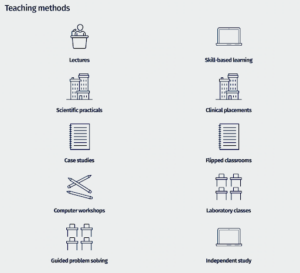
If you are studying at another UK or Irish Medical, Dental or Veterinary school, you can apply to join Imperial College London for one year to join their School’s integrated BSc programme. There is also an intercalated PhD option for medical students.
Graduate Prospects
In 2025, 98% of graduates from Imperial Medical School were in employment or further study 15 months after completing the course, with average annual earnings of £37,500. Additionally, Imperial scored very highly in areas of graduate satisfaction with the course.
FAQs
How is my application assessed?
A selection panel will decide whether you are offered an interview. This is based on:
- A-level (or equivalent) predicted/achieved grades
- UCAT scores
- Personal statement and Referee’s report:
- Evidence of commitment to the values of the NHS constitution
- Motivation and understanding of medicine as a career
- Community activities
- Evidence of leadership and teamwork skills
- Extracurricular activities
What is the interview style Multiple Mini Interviews?
The MMI interview style is adopted by many universities. At Imperial, MMIs are used as they are believed to give fair and accurate results, allowing many different interviewers to assess the candidate on various components. This means that if a candidate doesn’t do as well on one component it will not affect their assessment in other areas.
Does Imperial offer cadaveric dissection?
Students will learn about the anatomy of the human body through cadaveric teaching, clinical imaging and linked clinical skills.
When do students start learning clinical skills?
From the first term in year 1 students will start learning clinical skills. The initial focus will be on clinical communication skills which students will learn through interactions with patients in the community.
What is the social side of Imperial like?
The social life at Imperial is lively and inclusive, with a wide range of societies to take part in all across London. Imperial has a dedicated Union for medical students, offering social events throughout the year as well as supporting students in all aspects of their lives.
Studying in London is also a great opportunity to meet new people from diverse cultural backgrounds, whilst it also boasts great student nightlife as well as lots of free activities to do such as visiting art galleries and parks.

School Details
School Details

"We have a dedicated Union, specifically for medical students, to offer academic and pastoral support along with plenty of social events throughout the year."
